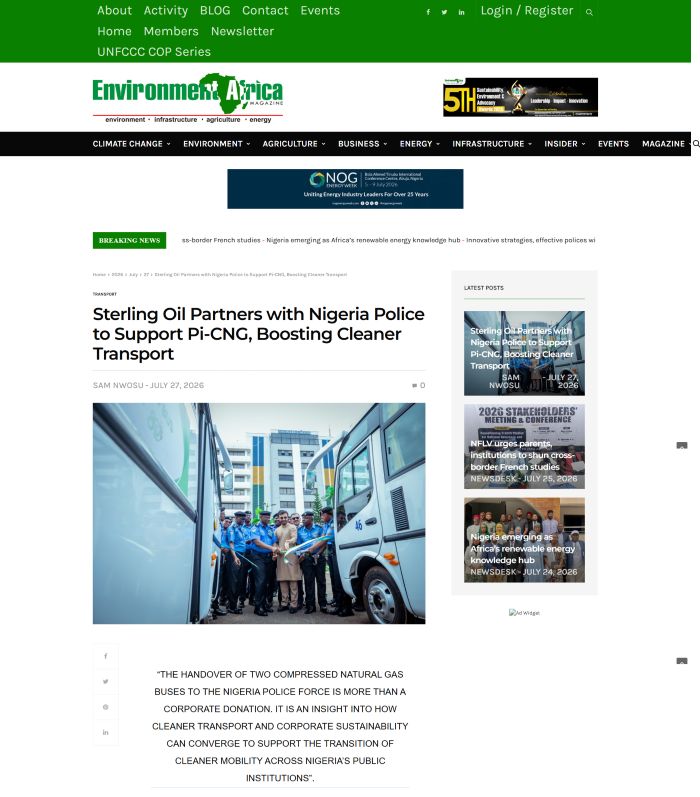
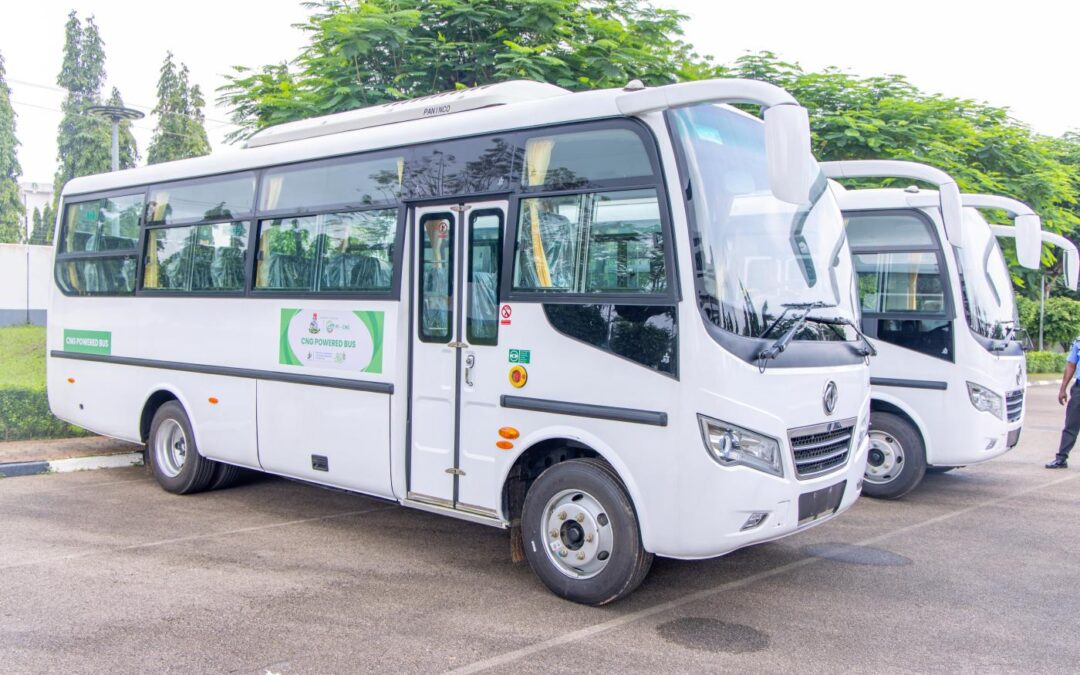
On Wednesday July 22, 2026, the Inspector-General of Police (IGP), Olatunji Riliwan Disu, alongside the Managing Director and Chief Operating Officer (COO) of Sterling Oil Exploration and Energy Production Company Limited (SEEPCO), Mr. Mohit Barot, officially unveiled two new CNG buses donated by Sterling Oil at the Force Headquarters in Abuja.
The ceremony brought together senior officers of the Nigeria Police Force alongside a delegation from Sterling Oil which apart from its MD and COO, also included the Head of Business Development , SEEPCO’s Public Relations Officer and other senior executives.
Unveiling the buses, the IGP, Mr Disu described the donation as a welcome addition to the Force’s logistics capacity, noting that the vehicles would improve personnel mobility while contributing to the welfare of officers.
He also acknowledged the growing role of private sector partnerships in supporting security institutions, describing such collaborations as important in strengthening operational efficiency and service delivery.
According to the Managing Director of Sterling Oil, the company views the donation as part of its broader corporate sustainability agenda and commitment to supporting national development beyond its core oil and gas operations.
While donations of operational vehicles to security agencies are not new, the choice of CNG rather than conventional diesel or petrol-powered buses is what makes this intervention noteworthy.
It reflects the growing mainstreaming of cleaner transportation technologies in sectors traditionally dependent on fossil fuels.
A Donation with Multiple Dimensions
The donation of the two CNG buses to the Nigeria Police Force by SEEPCO reflects a growing gesture of a form of corporate social responsibility activity that have come to be routinely undertaken by companies operating in Nigeria. Yet, beyond the ribbon-cutting ceremony and ceremonial handover lies a more significant story, one that intersects corporate sustainability, energy transition, public sector reform, and the future of cleaner transportation in Nigeria.
As Nigeria struggles with rising transportation costs, worsening urban air pollution and the drive to reduce greenhouse gas emissions without compromising economic growth, the introduction of cleaner fuel alternatives into public institutions, including the nation’s security agencies, signals a subtle but important evolution in Nigeria’s energy transition journey.
The question, however, is whether such interventions should remain isolated corporate gestures or represent efforts of a broader transformation in how public institutions should henceforth seek to power their operations.
A Signal of a Changing Landscape
The unveiling of two CNG buses at the Force Headquarters may not transform Nigeria’s policing landscape overnight.
Nor does it fundamentally alter the country’s environmental trajectory.
However, it represents something arguably more significant: evidence that cleaner mobility is gradually moving beyond policy documents and pilot projects into mainstream public institutions.
For Nigeria’s energy transition, progress is unlikely to come through a single transformative project. Instead, it will emerge through hundreds of incremental decisions, by government, businesses and public agencies, to adopt cleaner technologies wherever practical and economically viable.
Whether it becomes a footnote in corporate philanthropy or an early marker of greener public sector mobility will depend on what follows.
If replicated across government fleets, public transport systems and security agencies, such initiatives could contribute to lower fuel costs, improved air quality and reduced emissions while strengthening operational efficiency.
For now, the two buses stand as more than vehicles parked at the Police Headquarters. They represent a small but visible reminder that Nigeria’s transition towards cleaner mobility is already underway, and that even institutions traditionally associated with law enforcement have a role to play in building a more sustainable future.
“The handover of two compressed natural gas buses to the Nigeria Police Force is more than a corporate donation. It is an insight into how cleaner transport and corporate sustainability can converge to support the transition of cleaner mobility across Nigeria’s public institutions”. Sterling oil stated.